
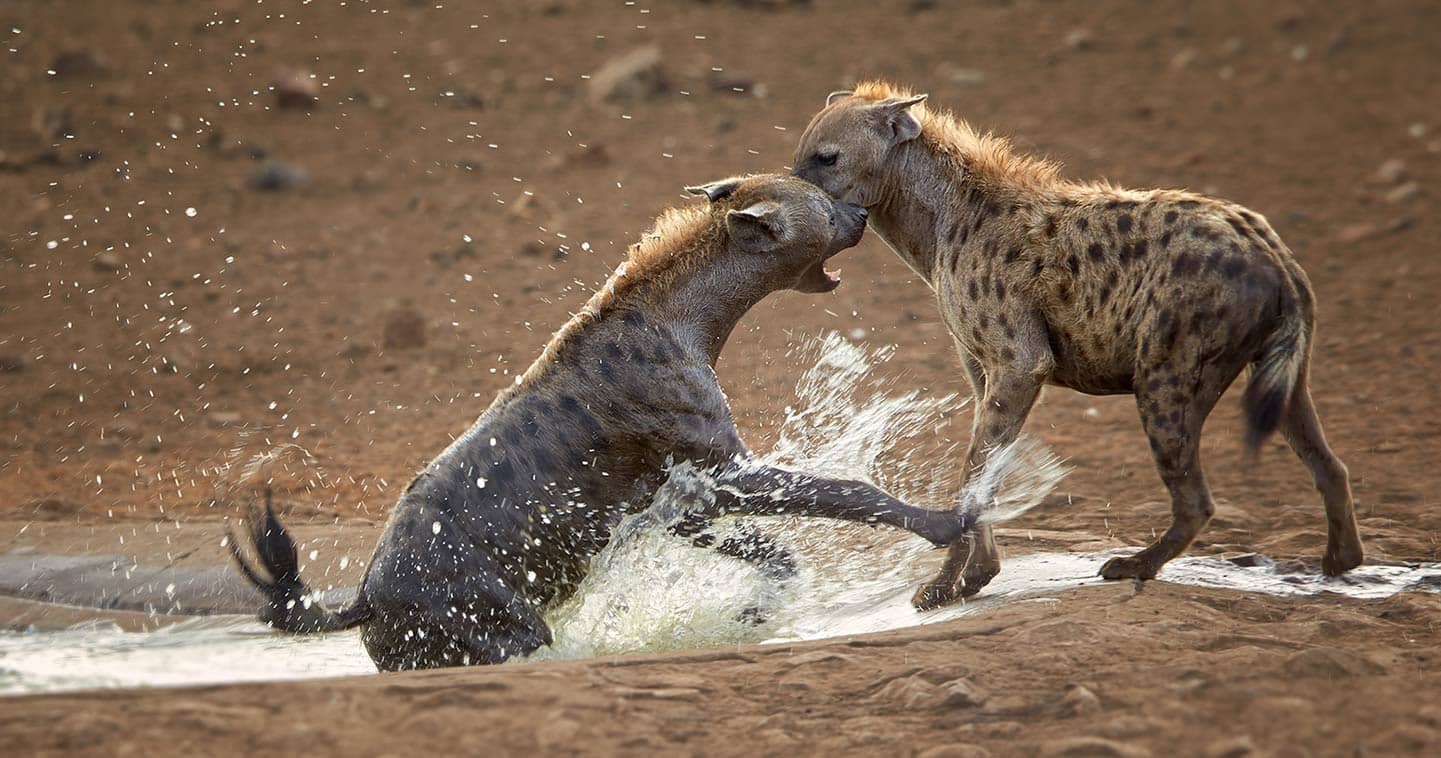
Hyenas:
Africa's Misunderstood Powerhouses
Far from the sneaky villains of cartoons, brown and spotted hyenas are clever, resilient survivors ruling Africa's ecosystems. These carnivores boast bone-crushing jaws and complex social lives that rival lions.
Brown hyenas roam southern Africa's deserts with shaggy coats and pointed ears, scavenging melons and carcasses in arid dunes.
Spotted hyenas, larger and bolder, dominate savannas across sub-Saharan Africa, hunting in packs under the stars.
Spot the Differences:
Brown vs. Spotted
Brown hyenas sport long, scruffy brown fur and thrive in drier coastal and desert zones like the Kalahari, often solo or in small groups. Spotted hyenas flaunt shorter, spotty pelage, weigh more (up to 90kg), and form massive clans in grasslands and swamps.
| Feature | Brown Hyena | Spotted Hyena |
| Appearance | Shaggy brown fur, pointed ears | Short spotted coat, rounded ears |
| Size / Weight | Smaller (~ 40-45kg) | Larger (~ 55-90kg) |
| Habitat | Deserts, coasts (southern Africa) | Savannas, swamps (sub-Saharan) |
| Diet / Behaviour | Mostly scavenging, some fruit | Hunts 95% of food, highly social |
Both crush bones like snacks, but spotted hyenas' "laugh" is a whoop signaling clan unity during chases.
Clever Hunters and Scavengers
Spotted hyenas outsmart prey with stamina hunts, taking down wildebeest twice their size in coordinated teams. Brown hyenas play the long game, raiding seal pups along shores or termite mounds at night.
These nocturnal nomads cool off in mud pools and communicate with scent marks over 10km away. Females lead spotted clans—tougher and heavier than males—flipping old predator stereotypes.
Error: Contact form not found.
